Farmer Mental Health in Alberta
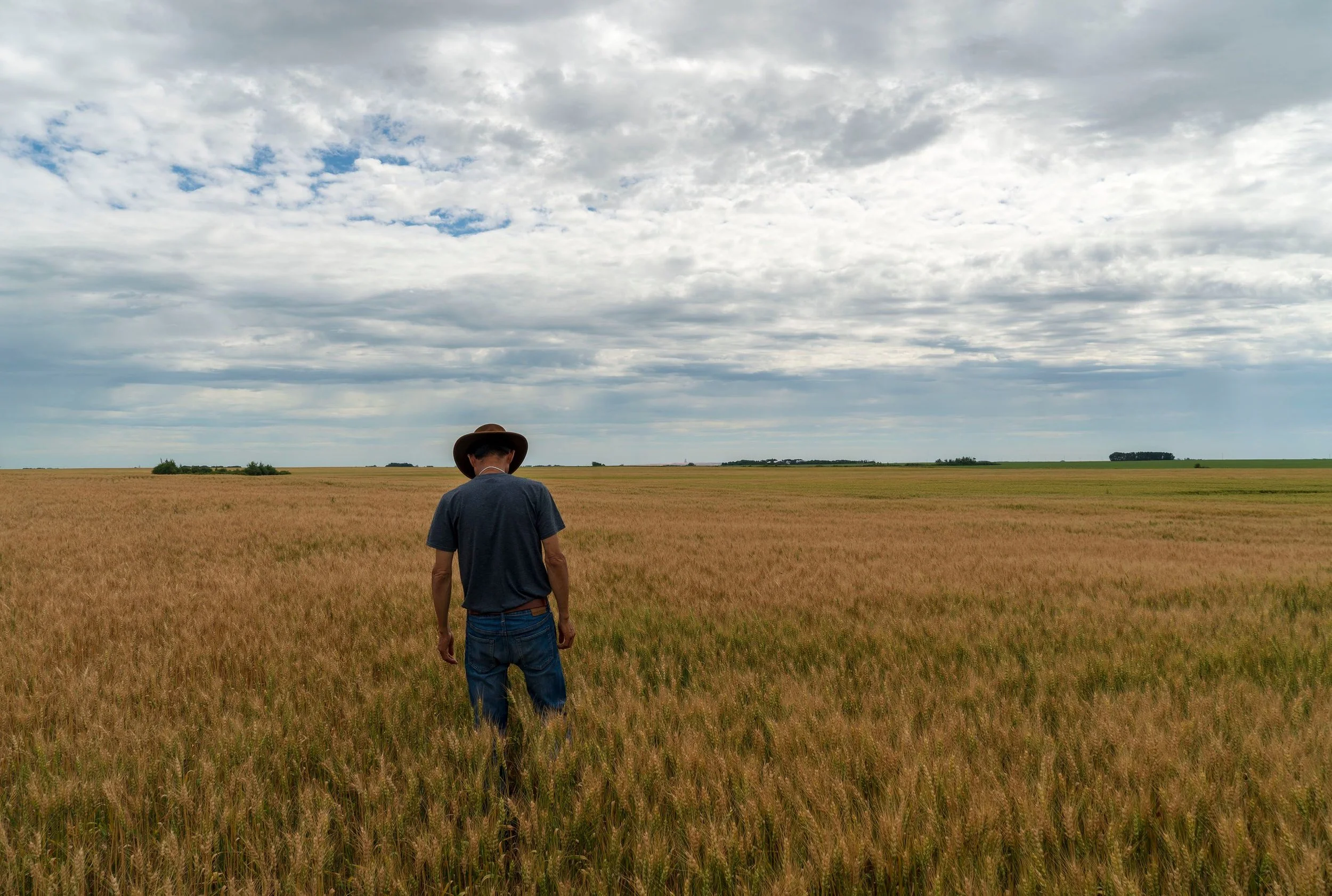
Farmer walking through his field in Alberta
Full disclosure! Before starting the Agricultural Informed Therapy Training through the National Farmers Mental Health Alliance, I understood that farming comes with unique challenges, but I hadn't fully appreciated just how deeply those challenges can affect the mental health of farmers and agricultural families across the country.
Climate change, debt, isolation, changing global markets, and limited access to medical and mental health services, especially for rural farmers, can all contribute to significant mental health challenges within farming communities.
The government, media and farming organizations are increasingly recognizing these challenges and the need for greater awareness and support for farmers and their families.
Research has found high levels of stress, anxiety and depression among Canadian farmers, with levels of these concerns higher than those found in the rest of the population. Researchers describe the findings as a significant public health concern (Jones-Bitton et al., 2020).
This, combined with limited access to services, limited or no insurance benefits, and the stigma around accessing mental health services, can leave many farmers and farming families struggling in isolation.
Many pressures are specific to farming. Financial uncertainty, unpredictable weather, long hours, livestock, markets, succession and family responsibilities can all contribute to ongoing stress, anxiety and burnout. For many farmers, there is also the pressure of keeping the farm going despite circumstances that may be largely outside of their control.
Even when individuals in the agricultural community seek out counselling or psychological services, being told to “do self-care,” “slow down” or “take a break” isn’t always helpful. During seeding or harvest, for example, slowing down may simply not be realistic when there are crops to get in or out of the ground, livestock to care for, and a livelihood that depends on getting the work done.
This is one of the reasons I believe it is important for mental health professionals to understand the realities of farming when working with farmers and agricultural families. What may be helpful for someone living in an urban environment may not always fit the reality of life on a farm or acreage.
Organizations such as the National Farmers Mental Health Alliance are helping to educate farmers about mental health and mental health providers about the realities of farming.
For me, this training has been an opportunity to learn more about the unique pressures faced by farmers and agricultural families, and about what it means to provide mental health support that takes those realities into account.
Farmers can experience anxiety, depression, chronic stress and burnout just like anyone else, but the circumstances surrounding those experiences can look very different. Having a better understanding of those circumstances matters when providing counselling and psychological support.
Sources
Jones-Bitton, A., Best, C., MacTavish, J., Fleming, S., & Hoy, S. (2020). Stress, anxiety, depression, and resilience in Canadian farmers. Social Psychiatry and Psychiatric Epidemiology, 55, 229–236.